What Is Warehouse Automation (and When Does It Actually Make Sense)?
Warehouse automation is the use of technology, including robotics, software, and integrated automation systems, to move, store, and fulfill inventory with minimal reliance on manual processes. It’s designed to increase speed, accuracy, and operational efficiency across modern warehouse operations.
But here’s the real question: When does it actually make sense to invest in it?
A warehouse automation system makes sense when operational friction becomes consistent and measurable, such as rising order volume, labor constraints, accuracy issues, or limited warehouse space, and when those challenges begin to impact cost, scalability, or customer experience.
What does warehouse automation include?
Warehouse automation spans a range of automated systems that support everything from inventory management to fulfillment execution.
Common examples include:
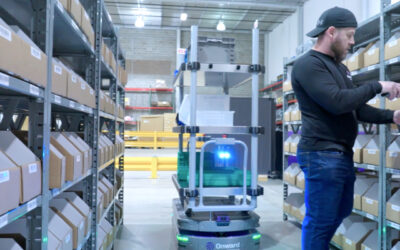
- Autonomous mobile robots (AMRs): Enable flexible movement of goods without fixed infrastructure
- Conveyor systems and conveyor belts: Automate product flow through picking systems and sorting zones
- Warehouse management systems (WMS): Coordinate inventory tracking, workflows, and order processing
- Warehouse execution systems (WES) and warehouse control systems (WCS): Optimize real-time decision-making across automation system activity
- Pick-to-light and put-to-light tools: Improve speed and accuracy in repetitive tasks
These warehouse automation tools form the backbone of an automated warehouse, blending physical automation with digital automation to streamline the entire warehouse process.
Why do companies invest in warehouse automation?
Most organizations don’t jump into automation technology without a reason. It’s typically driven by pressure across the supply chain.
Common triggers include:
- Labor shortages impacting warehouse operators and productivity
- Rising order volume overwhelming existing manual task workflows
- Inaccurate inventory control leading to costly errors
- Bottlenecks in fulfillment are slowing down warehouse throughput
- Increasing costs are reducing overall warehouse efficiency
When these issues persist, warehouse system automation becomes less of an upgrade and more of a necessity.
What are the benefits of warehouse automation?
When aligned correctly, automation solutions drive measurable gains:
- Faster fulfillment: Streamlined process automation reduces delays
- Improved accuracy: Better inventory tracking and fewer errors
- Labor optimization: Less reliance on repetitive manual processes
- Scalability: Growth without proportional labor increases
- Better use of warehouse space: Smarter layouts supported by automated storage
Ultimately, the right warehouse automation solution improves both speed and control across the operation.
When does warehouse automation actually make sense?
This is where strategy matters more than hype. Warehouse automation makes sense when:
- Order volume is stable and increasing
- Labor is difficult to scale or retain
- You’re reaching limits in warehouse space or throughput
- Errors are affecting margins or customer experience
- You need to improve operational efficiency without expanding your footprint
- Your workflows are structured and repeatable
In these cases, advanced automation can unlock meaningful gains. Automation may be harder to justify when operational challenges are temporary, growth projections are unclear, or there is limited visibility into fulfillment performance and business goals.
However, warehouse automation does not require operations to be perfectly optimized before implementation. In many cases, automation is most valuable in environments experiencing rapid growth, labor instability, workflow inefficiencies, or operational complexity. Flexible automation solutions can help warehouses improve performance while processes continue to evolve, especially when the technology is designed to adapt alongside changing fulfillment needs.
How do you know if your warehouse is ready for automation?
Before implementing a warehouse automation system, a warehouse manager should evaluate:
- Are workflows clearly defined and repeatable?
- Where are the consistent bottlenecks in warehouse fulfillment operations?
- What is your current cost per order?
- Are management systems providing clear warehouse performance data?
- How will growth impact your current setup?
A phased approach to system automation often delivers the best results, starting with targeted improvements rather than a full overhaul.
What are common misconceptions about warehouse automation?
“Automation replaces people.”
In reality, it supports the warehouse worker by reducing repetitive strain and improving productivity.
“Only large companies can afford it.”
Today’s warehouse automation systems are modular and scalable, making them accessible to mid-sized operations.
“It requires a completely new facility.”
Many automation systems integrate into existing warehouses using flexible designs.
“It’s purely mechanical.”
Modern systems increasingly incorporate artificial intelligence and warehouse automation software to optimize decisions in real time.
What does warehouse automation look like in practice?
In a typical automated warehouse, multiple automated systems work together:
- Robots retrieve and transport inventory
- A warehouse execution system coordinates workflows
- A warehouse control system manages equipment like a conveyor system
- A warehouse management system ensures accurate inventory management
This combination of process automation and digital automation creates a more responsive and efficient operation.
How should you approach warehouse automation strategically?
A successful warehouse automation solution follows a structured path:
- Assess current workflows and identify inefficiencies
- Analyze inventory control and fulfillment data
- Define clear goals for warehouse efficiency
- Evaluate the right mix of automation technology
- Implement scalable automation systems and expand over time
The goal is not complexity. It’s clarity and performance.
Final takeaway: Is warehouse automation right for you?
Warehouse automation is not a one-size-fits-all investment. The right automation solution depends on your operation’s size, complexity, and growth trajectory.
When applied at the right time, a warehouse automation system can transform performance across your supply chain, improving speed, accuracy, and long-term scalability.
FAQs: Warehouse Automation
1. What is a warehouse automation system?
A warehouse automation system combines robotics, software, and automated systems to streamline inventory movement, storage, and fulfillment processes.
2. What are examples of warehouse automation technology?
Examples include automated guided vehicles, conveyor belts, goods-to-person systems, and warehouse automation software that manages workflows.
3. How does warehouse automation improve inventory management?
Automation improves inventory tracking, reduces human error, and enhances overall inventory control through integrated management systems.
4. Can smaller warehouses benefit from automation?
Yes. Many automated warehouse solutions are modular, allowing smaller operations to adopt basic automation and scale over time.
5. What role does software play in warehouse automation?
Software such as a warehouse management system or warehouse execution system enables coordination, visibility, and optimization across all automation systems.
6. How does automation impact warehouse workers?
Automation reduces repetitive manual tasks, allowing each warehouse worker to focus on higher-value activities while improving safety and productivity.
 Blog
Blog