Before Automation Comes Solutioning: Why the Right Warehouse Design Starts with the Right Questions
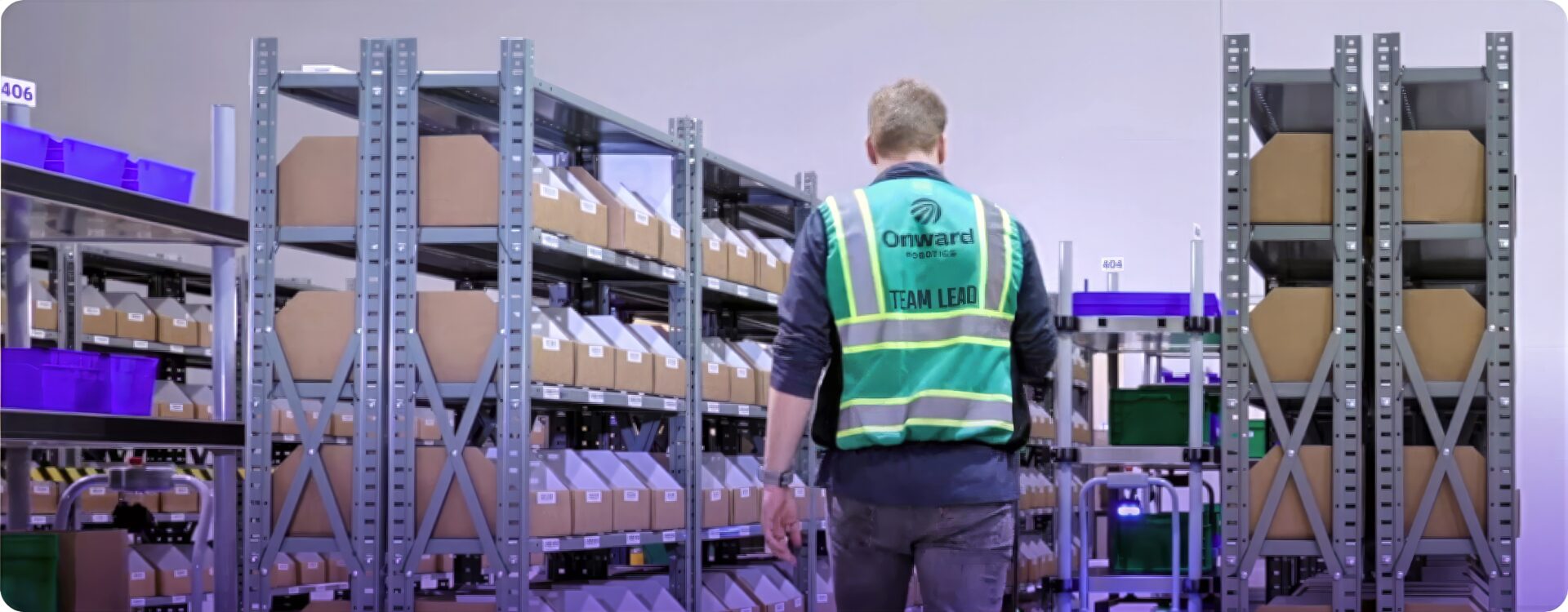
When fulfillment facilities begin exploring warehouse automation, they often expect conversations about robots, software, integrations, and ROI. They may not expect a dedicated team asking detailed questions about aisle widths, shift structures, cart configurations, pick paths, and the number of scans required per pick.
But according to Molly Deuson, Director of Solution Design at Onward Robotics, that's exactly where successful automation projects begin.
"Every facility is different," says Molly. "Before we can recommend a solution, we need to understand how the operation actually works. That's where the Onward Robotics Solutions team comes in.”
What is a warehouse solutions team?
Many leaders in warehousing are familiar with the sales process. Sales teams help identify business challenges, evaluate fit, and introduce potential solutions. The Solutions team takes that conversation several layers deeper.
"Our job is to support the commercial team by creating customer-focused designs, applying logical data analytics, and helping customers make informed decisions," Molly explains.
The team combines decades of warehouse operations, engineering, and fulfillment expertise to analyze workflows, identify inefficiencies, and design automation strategies grounded in operational reality rather than assumptions. Unlike traditional product demonstrations, solutioning sessions focus on understanding the facility first. The goal of the solutions team isn't to sell a robot; it’s to determine what will actually improve the operation.
Looking Beyond the Pain Point
A prospect may tell a sales representative they're struggling with labor shortages, excessive walking, or growing order volume. Recognizing operational weakness is an important starting point.
The Solutions team wants to understand why.
"We perform a much deeper quantitative analysis of the workflow," says Molly. "Sales can identify the opportunity. Our job is to quantify the impact and determine what's possible." That means examining facility layouts, picking processes, volume patterns, labor structures, equipment, and existing technology.
Questions like:
- How large is the pick area?
- How many orders are picked each day?
- What is the current pick rate?
- How many associates are working per shift?
- How much walking is involved?
- What equipment or technology is already in place?
- How often do picking errors occur?
These details allow the team to visualize the day-to-day experience of warehouse associates and identify the true operational constraints. Often, the biggest challenge isn't the one the facility team initially identified, but rather inefficiencies in movement, resource orchestration, and overall operational flow.
"We frequently discover opportunities to reduce unnecessary walking, eliminate heavy cart pushing, or streamline inefficient workflows," Molly says.
What happens during a warehouse solutioning session?
A solutioning session is designed to provide clarity. Before the meeting, you receive a preparation guide that helps gather key operational information. While customers don't need every answer, having baseline data allows the Solutions team to deliver more meaningful recommendations. The more data, the better! Onward’s solutions team is ready and qualified to sort through the numbers and make the strongest analysis.
During the session, the team conducts a technical deep dive into the operation.
By the end of the conversation, customers can expect a rough-order-of-magnitude analysis that helps answer questions such as:
How many robots might be required?
How many pickers would support the system?
Where would automation create the greatest impact?
What operational outcomes are realistic?
Rather than presenting a one-size-fits-all deployment model, the team develops recommendations around the customer's specific workflows, constraints, and goals.
Designing Around the Operation, Not the Other Way Around
One of the most common concerns companies have when evaluating automation is whether they'll need to redesign their facility to fit the technology.
Molly says that the mindset is becoming increasingly outdated. "Flexibility is one of the biggest priorities we see today," she explains. "Operations change quickly, and customers need solutions that can adapt." That's why Onward's approach focuses on designing around the customer's environment.
The Solutions team considers factors such as:
Product Characteristics

Shift Structures
Warehouse Traffic Patterns

Cut-Off Times
Existing Workflows
Future Growth Plans
A Partnership That Doesn't End After the Sale
Perhaps the biggest misconception about solutioning is that it ends once a design is approved. In reality, the relationship often continues long after implementation.
The Solutions team partners with customers throughout the entire project lifecycle. That includes:
- Initial discovery
- Operational analysis
- Solution design
- Detailed engineering
- Deployment support
- Expansion planning
Once a project is awarded, the team works closely with engineering and deployment teams to ensure the original design intent is carried through to implementation. Even after go-live, they're often involved in future optimization projects and automation expansions.
"We take our designs personally," Molly says. "We're invested in the success of the operation."
That investment frequently leads to site visits, collaboration with customer engineering teams, and long-term partnerships built on trust.
Helping Clients Avoid Costly Automation Mistakes
Warehouse automation is a significant investment; making the wrong decision can have lasting operational and financial consequences.That's why one of the most valuable roles of a solutions engineer is helping customers evaluate opportunities through a broader operational lens.
Because many members of the team have worked directly in warehouse operations, they understand the downstream impacts of process changes. They're not only thinking about picking but also considering labor planning, shift structures, operational scalability, and future business requirements. This perspective helps customers make decisions based on long-term operational outcomes rather than short-term technology features.
The Future of Warehouse Automation Is Flexibility
Over the past decade, warehouse automation conversations have evolved dramatically. Five years ago, many operators were still learning the basics of autonomous mobile robots. Today, most customers already understand the technology, and the conversation has shifted.
"Customers aren't asking what an AMR is anymore, they're asking why your system is better for their operation."
Molly Deuson, Director of Solution Design | Onward Robotics
As fulfillment networks become more dynamic and customer expectations continue to rise, flexibility and resilience have become critical decision-making factors. Organizations need automation that can be deployed quickly, adapt to changing business requirements, and generate value without forcing major operational disruption. For Molly, that's exactly where solutioning creates the greatest value.
Start with Clarity
If there's one thing Molly hopes every prospect takes away from their first conversation with the Solutions team, it's confidence and clarity. "We want customers to walk away with clarity," she says. "Automation is more attainable than people think. It doesn't have to be complicated or intimidating." And sometimes, the most valuable outcome of a solutioning session isn't a robot count or an ROI calculation.
It's finally having a clear picture of what's possible inside your operation.
Ready to Explore What's Possible?
A solutioning session is more than a product conversation. It's an opportunity to analyze your operation, uncover hidden inefficiencies, and understand what automation could realistically achieve for your business.
Book a solutioning session with the Onward Robotics team and start with clarity.
Frequently Asked Questions about Solution Design
What is a warehouse solutioning session?
A warehouse solutioning session evaluates your workflows, facility layout, labor, and fulfillment processes to determine where automation can deliver the greatest operational value. The goal is to design a solution based on your operation, not a one-size-fits-all approach.
What does a warehouse solutions team do?
A warehouse solutions team analyzes warehouse operations, identifies inefficiencies, and recommends automation strategies based on data, workflows, and business goals. They help ensure the solution fits your operation today and can scale for future growth.
What information should I prepare for a warehouse solutioning session?
Bring information such as your warehouse layout, order volume, picking rates, labor structure, existing equipment, and operational challenges. The more operational data available, the more accurate the recommendations will be.
Will I need to redesign my warehouse for automation?
Not usually. Modern warehouse automation is designed to work within existing facilities whenever possible. Solutioning considers your layout, workflows, traffic patterns, and growth plans before making recommendations.
How can a warehouse solutioning session improve efficiency?
A solutioning session identifies opportunities to reduce walking, eliminate bottlenecks, improve picking workflows, and optimize labor. These insights help increase productivity before automation is implemented.
How many autonomous mobile robots (AMRs) does my warehouse need?
The right number of AMRs depends on factors like warehouse size, order volume, workflows, and labor requirements. A solutioning session helps determine the appropriate system design for your operation.
Is a warehouse solutioning session only for companies ready to automate?
No. Many companies use solutioning sessions to evaluate their operations and understand future automation opportunities before making an investment.
What happens after the automation solution is designed?
The Solutions team continues supporting the project through implementation, deployment, and future optimization to help ensure the system delivers long-term operational value.

 Blog
Blog