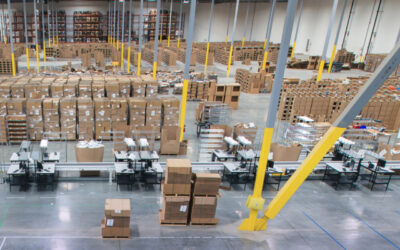
Terms to Know Before Exploring Automation: A Fulfillment Operations Glossary
Warehouse automation conversations can get technical quickly.
At Onward Robotics, a solutions conversation starts with understanding your facility, workflows, technology, and goals. This helps our team build a strategy around your operation, rather than fitting it into a standard solution. Before discussing robots, software, or system design, it helps to understand the operational language that shapes the right solution.
Use this glossary to become familiar with the fulfillment terms that commonly come up during a solutions conversation.
A B C D E F G H I J K L M N O P Q R S T U V W X Y Z
B
CONCEPT
Business Case
An evaluation of the operational and financial value of a proposed solution. A warehouse automation business case may consider productivity, labor requirements, throughput, implementation costs, scalability, and expected return on investment.
Using actual facility data creates a stronger and more accurate business case than relying only on general industry benchmarks.
C
PROCESS
Case Picking
A fulfillment method in which full cases of a product are selected instead of individual items. Case-picking operations may require different equipment, payload capacity, storage layouts, and handling processes than each-picking operations.
→ See also: each picking
EQUIPMENT
Container
A tote, carton, bin, or other receptacle used to hold picked products as they move through fulfillment. The number of containers that fit on a cart or robot can affect how many orders can be picked during a single route.
D
METRIC
Daily Volume
A fulfillment method in which full cases of a product are selected instead of individual items. Case-picking operations may require different equipment, payload capacity, storage layouts, and handling processes than each-picking operations.
E
METRIC
Each Picking
(piece picking or split-case picking)
A fulfillment method in which associates select individual items from inventory rather than full cases or pallets. Each-pick operations often manage large SKU counts, varied order profiles, and a high number of pick interactions.
→ See also: case picking
F
CONCEPT
Facility Footprint
The total amount of space within a facility, including picking, storage, packing, shipping, and other operational areas. Understanding the facility footprint helps determine where automation could operate and how it would fit into the existing layout.
L
METRIC
Lines Per Hour (LPH)
A productivity metric measuring the number of order lines picked during one hour of picking time.
LPH = Total lines picked ÷ Total picking hours
LPH can provide a more consistent view of picking workload than orders per hour because each order may contain a different number of lines.
EQUIPMENT
Lumabot® AMRs
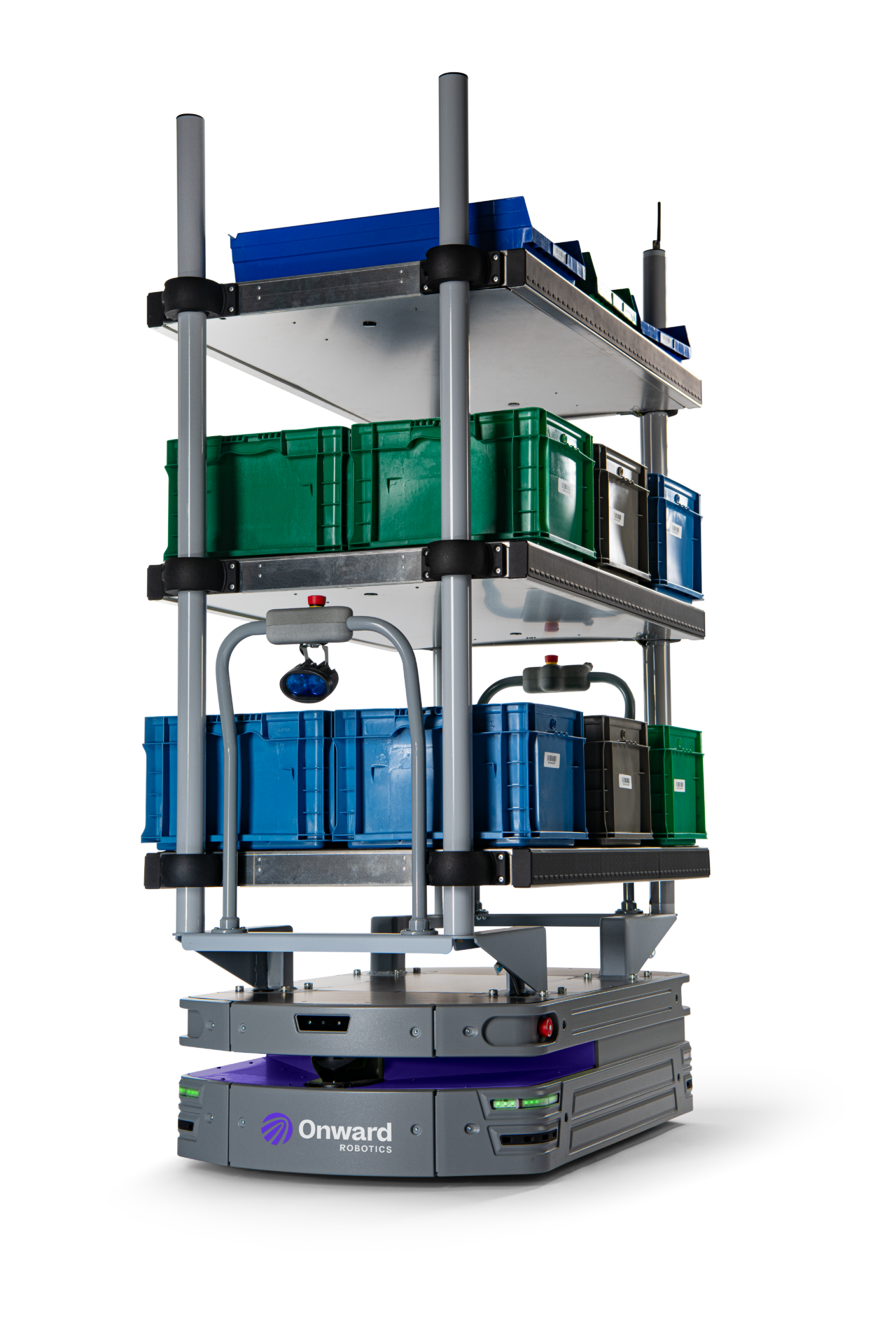
Agile, intelligent, and high-capacity autonomous mobile robots built for fulfillment picking. Lumabot AMRs operate as part of the Meet Me solution, moving independently to meet associates at the next best pick location.
With a 460-pound payload, put-to-light guidance, double-sided picking, hot-swappable batteries, and more than 20 hours of runtime, Lumabot helps reduce associate travel and keep picking work moving.
M
EQUIPMENT
Material Handling Equipment (MHE)
Equipment used to move, store, control, or protect products throughout a facility. Common examples include forklifts, conveyors, pallet jacks, picking carts, and autonomous mobile robots.
Understanding which types of MHE share the pick aisles helps solutions teams account for traffic, congestion, and safety requirements.
PROCESS
Meet Me® Automation
A person-to-goods fulfillment solution in which associates and Lumabot AMRs move independently and meet at the next best pick location.
Pyxis Suite orchestration coordinates the work of people and Lumabots so associates don’t have to search for or follow robots, and robots don’t have to wait for associates. This reduces unnecessary walking and waiting while increasing picking productivity and throughput.
O
CONCEPT
Order
A customer request containing one or more products to be fulfilled and shipped. Order counts help measure overall demand, but they do not always reveal the full amount of picking work required. For example, two facilities may process the same number of orders while handling very different numbers of lines or units.
METRIC
Order Line
A distinct product listed within an order. If an order contains three different SKUs, it typically contains three order lines, regardless of how many units of each SKU were requested.
P
CONCEPT
Peak Seasonality
Recurring periods when order volume increases significantly, such as holidays, annual sales events, or industry-specific demand cycles.
Understanding when peaks occur and how high volume climbs helps determine whether an automation solution can scale with demand without relying heavily on temporary labor.
CONCEPT
Pick Aisle Width
The distance between storage racks or shelving within the pick area. Aisle width helps determine which associates, robots, carts, forklifts, and other equipment can safely operate in the same space.
CONCEPT
Pick Area
The portion of a warehouse or fulfillment center where associates retrieve inventory to complete orders. Its size, layout, and inventory density can all influence picker travel and automation design.
ROLE
Picker
An associate responsible for retrieving products from inventory to fulfill orders. The number of pickers working during each shift helps establish current labor requirements and total picking capacity.
EQUIPMENT
Picking Cart
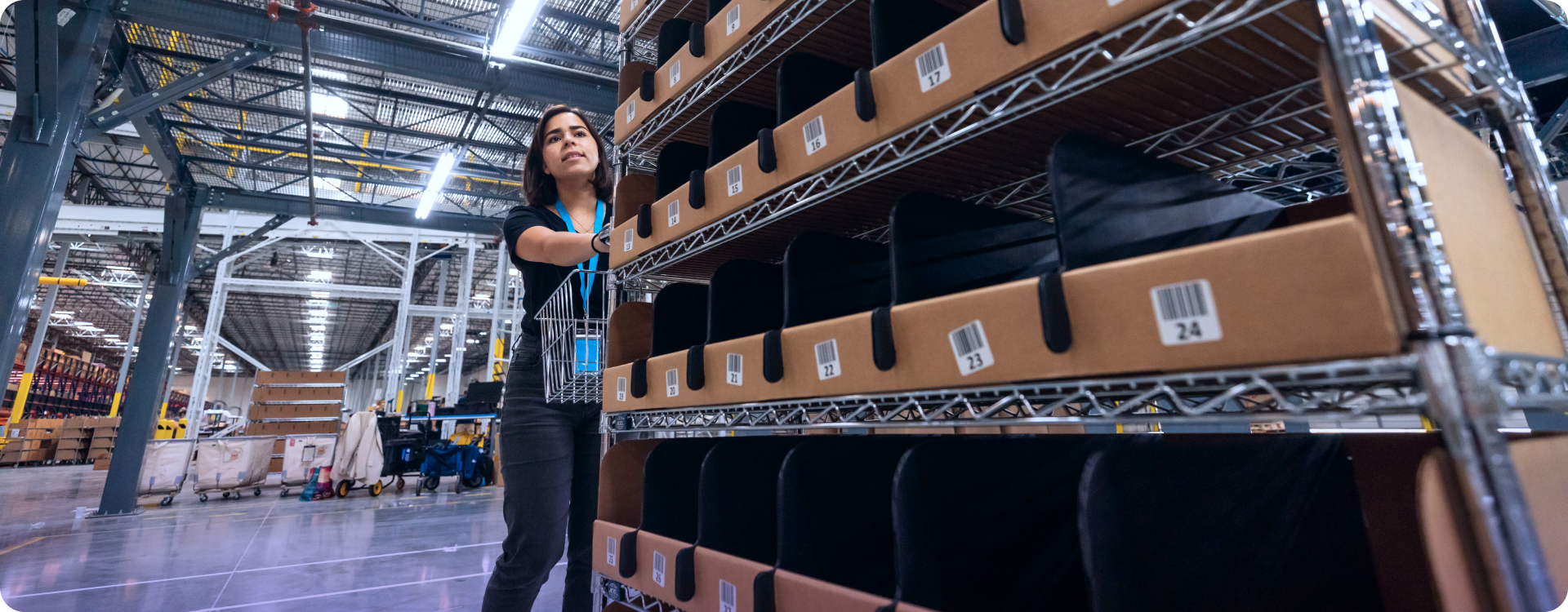
A cart used by associates to hold containers and transport picked items through the facility. Cart capacity, dimensions, maneuverability, and container configuration can all affect picking efficiency.
Documenting existing cart or equipment setups helps solutions teams understand what associates use today and where automation may create improvements.
METRIC
Picking Productivity
The amount of work completed by a picker or picking system within a set period. Productivity may be measured using lines per hour, units per hour, orders per hour, or another metric that reflects the operation’s goals.
The most useful measurement is the one that accurately reflects how your facility works today.
PROCESS
Picking Workflow
The sequence of steps associates follow to retrieve products and move orders toward packing or shipping. A picking workflow can include receiving task instructions, traveling to a location, confirming an item, placing it into a container, and completing or transferring the order.
Mapping the current workflow helps identify where associates spend time walking, waiting, searching, or completing unnecessary steps.
PRODUCT
Pyxis Suite™
Onward Robotics’ intelligent orchestration platform, which connects operational data and coordinates fulfillment work across people and automation.
Pyxis Suite includes four tools:
Pyxis Bridge™
The data translation layer that connects systems such as a WMS, ERP, OMS, and automation
Pyxis Conductor™
The orchestration engine that prioritizes, sequences, balances, and assigns work in real time
Pyxis Point™
The mobile application that provides associates with step-by-step induction, picking, and exception-handling guidance
Pyxis Hub™
The operational dashboard that provides real-time visibility into progress, throughput, exceptions, and SLA risk
Together, these tools help operations move from reacting to problems to anticipating and managing work more effectively.
S
CONCEPT
Shift Structure
The way labor is scheduled across the operating day. A facility may run one, two, or three shifts, as well as overlapping or staggered shifts.
Shift structure provides important context for evaluating labor availability, daily capacity, equipment utilization, and the amount of runtime required from an automation solution.
PROCESS
System Integration
The process of connecting automation technology with existing software and equipment so information can move accurately between systems.
For example, Pyxis Bridge connects with systems such as a WMS, ERP, or OMS to support two-way communication between the operation and its automation.
U
METRIC
Unit
An individual item picked to fulfill an order. One order line may require a single unit or multiple units of the same SKU.
V
CONCEPT
Volume Spike
A short-term increase in order activity caused by promotions, unexpected demand, weather events, product launches, or other business conditions. Unlike predictable seasonal peaks, volume spikes may happen with little warning.
W
SYSTEM
Warehouse Management System (WMS)
Software that manages core warehouse activities such as inventory, order processing, picking, replenishment, and shipping.
An automation solution typically connects with the WMS to receive order and inventory information and return status updates as work is completed.

Start With Your Fulfillment Operation
You do not need every number or answer before beginning an automation conversation. Even rough information about your facility, volume, workflow, and technology can help identify the right questions to explore.
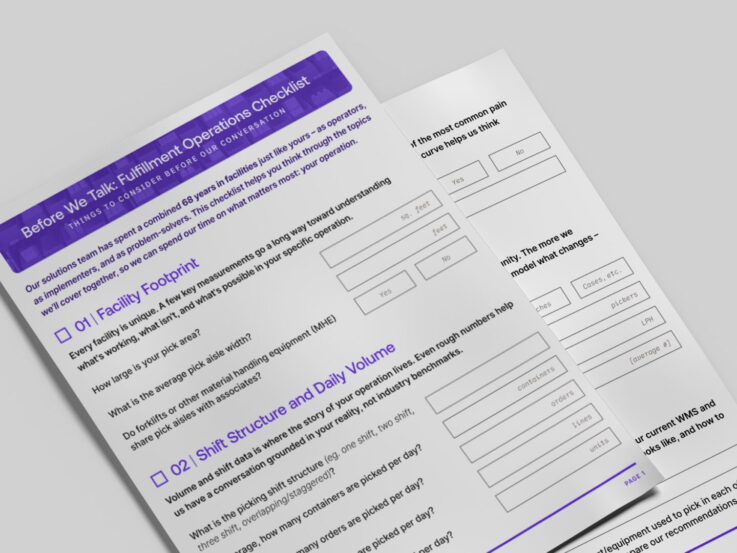
Our new Fulfillment Operations Checklist brings these topics together in one place, helping you prepare for a more productive solutions conversation grounded in the realities of your operation.
Download the Fulfillment Operations Checklist →
and start gathering the information that can shape your automation strategy.

 Blog
Blog